Can You Win a Staring Contest Against Your Own Reflection? (Strange Face Illusion Explained)
The Ultimate Face-Off Nobody Saw Coming
Picture this: You’re standing in front of your bathroom mirror at 2 a.m., bleary-eyed but strangely competitive. Suddenly, a wild thought flashes through your mind — can you win a staring contest against your own reflection? Yes, that exact reflection who knows all your quirks, your smudged makeup, your bedhead moments, and that suspicious crumb stuck on your chin. The question is not just a curiosity, it’s a challenge worthy of the ages.
Welcome, dear reader, to the greatest showdown you never knew you needed.
Why Challenge Your Reflected Doppelgänger?
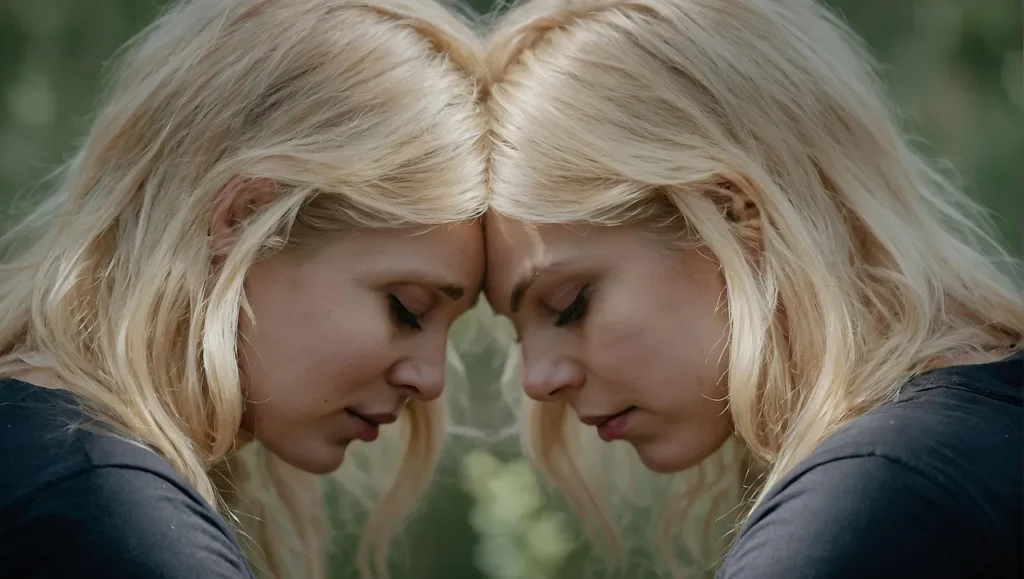
You might ask, “Why waste precious energy in a contest where both opponents are… well, you?” But think about it — this isn’t just a battle of blink versus no blink; it’s a philosophical duel between your conscious self and your mirror image, the silent observer who’s been judging your life choices all along.
Also, there’s the undeniable allure of glory. Imagine telling your friends you defeated your reflection in a skill-based contest. It’s bragging rights so elite, it practically guarantees viral Instagram stories and Twitter threads with hashtags like #MirrorMaster2025 and #BlinkNoMore.
The Rules of Engagement
Traditional staring contests are simple: no blinking. But when the opponent is your reflection, the rules get… interesting.
- Rule 1: No peeking away. If you look anywhere but into your own eyes, you forfeit.
- Rule 2: Your reflection never blinks. Ever. It’s like a stone statue except creepier.
- Rule 3: No cheating by turning off the lights or covering the mirror with a towel.
- Rule 4: Smiling is encouraged, but don’t let your reflection see it as weakness.
The Psychological Warfare
Battling your own eyes is not just a physical challenge; it’s a mental marathon. You will conjure up every technique known to humankind:
- The “intense focus”: staring so hard it feels like your brain cells are doing squats.
- The “blinking distraction”: a cunning plan to lure your reflection into blinking. (Spoiler: it never actually works.)
- The “eye twitch bluff”: pretending you’re about to blink but holding steady like a ninja master.
Meanwhile, your reflection remains an unblinking stone-cold opponent, mocking you with the same face you’ve argued with nightly about what to wear or whether you actually need to eat that leftover pizza.
The Physiology of Staring at Yourself
Fun fact: staring at your reflection for longer than a few seconds might trigger a strange phenomenon called the “strange-face illusion,” where your face begins to warp and morph into something eerily unfamiliar. This is your brain’s way of saying, “Dude, stop this madness.”
So ironically, your reflection might “lose” not because it blinked but because your own mind turns it into a ghoulish caricature. This may count as a win or at least a draw, depending on how you want to spin it on TikTok.
Why Does My Reflection Look Weird When I Stare at It?
Ever lock eyes with your mirror self for too long and suddenly think, “Who the heck is that goblin staring back?” Your reflection starts morphing—eyes bulge like a surprised cartoon, your nose elongates into a witchy proboscis, and your grin turns demonic. It’s not a haunt; it’s your brain throwing a tantrum after processing the same face data on repeat, especially in dim light where details fade like a bad tattoo.
Strange Face Illusion Explained
Enter the “strange-face illusion,” a brain glitch discovered by psychologist Giovanni Caputo, where prolonged mirror-gazing (think 10 minutes in low light) turns your mug into a parade of monsters, ancestors, or that one uncle nobody invites to weddings. Blame the Troxler effect: your neurons get bored with steady input, causing peripheral features to vanish and reassemble into freakish gestalts—like your lips fusing into a single creepy slash. Over 66% of folks report massive deformations; 48% see outright monsters. Your mind’s just remixing your face like a lazy DJ at a Halloween rave.
The Strange Face Illusion: When Your Brain Says “Let’s Prank You!”
Ever stared at your reflection and thought, “Wow… I look like a Picasso painting today”? Congratulations — you’ve experienced the strange face illusion, the brain’s way of entertaining itself when it gets bored. When you stare too long, your visual neurons start phoning it in, and your brain fills the gaps with whatever nonsense it finds lying around. Suddenly your reflection morphs into a medieval goblin, your nose becomes suspiciously pointy, and you start wondering if your ancestors really were cave trolls. It’s not paranormal — it’s just your brain being a chaotic roommate.
Why Does My Face Look Weird in the Mirror? (Asking for a Friend… Who Is Me.)
If you’ve ever leaned close to the mirror and whispered, “Why does my face look weird in the mirror?”—trust me, you’re not alone. Mirrors have a magical ability to bring out every pore, wrinkle, and questionable life choice. But the real reason is simple: you’re seeing your face in an angle and lighting no human was meant to endure. Add five seconds of intense staring and your brain starts glitching like an old computer. It’s not that your face is weird… it’s that mirrors are snitches with no loyalty.
Mirror Staring Illusion: The Olympics of Scaring Yourself
The mirror staring illusion is basically you vs. your reflection in a psychological staring contest. After a while, your brain starts fading out details, and what remains looks like the villain of a low-budget horror movie. Eyes shift, shadows dance, and suddenly you look like you’ve been living in an attic for 300 years. It’s not dangerous — unless you count the half-second of panic when you jump back like, “WHO INVITED YOU?”
Spoiler: It was you. It was always you.
Why Do Faces Distort in the Mirror? (Because Neurons Get Lazy.)
Your brain tries to process the same unchanging image for too long and basically says, “Nah, I’m clocking out.” That’s why faces distort in the mirror—your neurons get bored and start deleting and remixing things. Think of it like Photoshop, but your brain is the intern who barely passed training. Suddenly your eyebrows melt, your cheeks shift, and your jawline takes a vacation. Science calls it “peripheral fading.” You call it “absolutely not doing this again at midnight.”
The Mirror Hallucination Phenomenon: Haunted by… Yourself
The mirror hallucination phenomenon can make you see faces morph, shadows move, or expressions change — even though you’re just standing there like a confused garden gnome. It’s not ghosts, demons, or a portal to another dimension… unless that helps you sleep at night. But scientifically, it’s a mix of sensory fatigue and your imagination turning up the drama. Basically, you hallucinate your own face.
Which is kind of rude, honestly.
Mirror Staring Psychology
Psychologically, this stare-down is self-sabotage gold: it triggers dissociation, blending “me” and “not-me” until you’re questioning if you’re the original or the knockoff. Low light amps sensory deprivation, sparking pseudo-hallucinations via neural adaptation—your facial recognition software crashes, mistaking traits for strangers or beasts. It’s linked to schizotypy in extremes, but for us normies, it’s a hilarious ego check: mirrors expose how fragile our “self” really is, one unblinking second at a time.
Is It Possible to Beat Your Reflection?
Short answer: Nope, because your reflection is a flawless copycat—it blinks when you do, rendering victory as impossible as high-fiving yourself without looking ridiculous. Even if the strange-face illusion warps it into a loser (win by technicality?), you still flinch first from the creep factor. Pro tip: declare a draw, grab coffee, and brag online anyway—viral fame awaits the unblinking underdog
Can You Actually Win?
Logically, your reflection can never blink or “lose” because it is literally you. But here’s the twist: the moment you blink, you lose. The reflection? Always undefeated.
So in this contest, you will learn the most important life lesson: sometimes, you have to accept defeat gracefully — especially when your opponent is a flawless, eternal mirror image who apparently never needs to blink or even breathe.
Expert Opinions (or Just Made-Up Ones)
Dr. Ima Ginary, a fictional psychologist and Mirror Studies expert, states:
“Attempting to beat your reflection in a staring contest is an act of self-confrontation. It symbolizes the human quest to face one’s true self, fears, and insecurities, all while trying not to squint.”
Meanwhile, professional procrastinator and YouTube star Lazy Larry claims:
“I’ve stared at my reflection for thirty-seven minutes once. Still lost. But now I’m really good at making weird faces.”
The Takeaway: Why This Matters
Winning a staring contest against your reflection may be impossible, but attempting it is a hilarious metaphor for life’s tricky challenges. It’s about embracing the ridiculous, enjoying the absurd, and maybe mocking yourself a bit in the process.
The next time you’re brushing your teeth or waiting for your coffee to brew, lock eyes with yourself and declare, “Let’s see who blinks first.” Spoiler alert — you will, and that’s perfectly okay.
After all, if you can’t laugh at your own reflection, who can you laugh at?
FAQ
Why do faces distort when staring in a mirror?
Faces distort because your brain stops processing visual details that stay still for too long. This is caused by neuronal fatigue and the Troxler effect, where your visual system fades out stable features in your peripheral vision. As a result, your reflection begins to look warped, melted, or unfamiliar—even though nothing in the mirror actually changes.
What is the strange-face illusion?
The strange-face illusion is a psychological phenomenon discovered by researcher Giovanni Caputo. When you stare at your reflection for an extended period, especially in dim light, parts of your face begin to morph into distorted or unfamiliar shapes. Many people report seeing monstrous faces, strangers, or even animal-like features. It happens because your brain blends missing visual information with imagination, memories, and pattern recognition errors.
How long does it take for the illusion to start?
Most people experience the illusion within 10 to 60 seconds of continuous mirror-gazing. In low light, the effect is much stronger because shadows reduce detail, making it easier for your brain to “fill in the gaps” with distorted interpretations. If you stare for several minutes, the distortions tend to become more dramatic.
Is mirror staring dangerous?
For most people, mirror staring is not dangerous—it’s simply a quirky brain glitch. However, long sessions can trigger temporary dissociation, mild anxiety, or a feeling that you’re looking at someone else. Individuals with certain mental health conditions (like high schizotypy or depersonalization tendencies) may experience stronger or more unsettling illusions and should avoid prolonged mirror-gazing.
Can you win a staring contest with yourself?
No—you can’t win a staring contest against your reflection. Your reflection only blinks when you blink, which means it will never lose before you do. Even if the strange-face illusion makes your reflection look “defeated,” you still blink first. The contest always ends in either a draw or your own blink-induced defeat.